


Blog
Alabaster

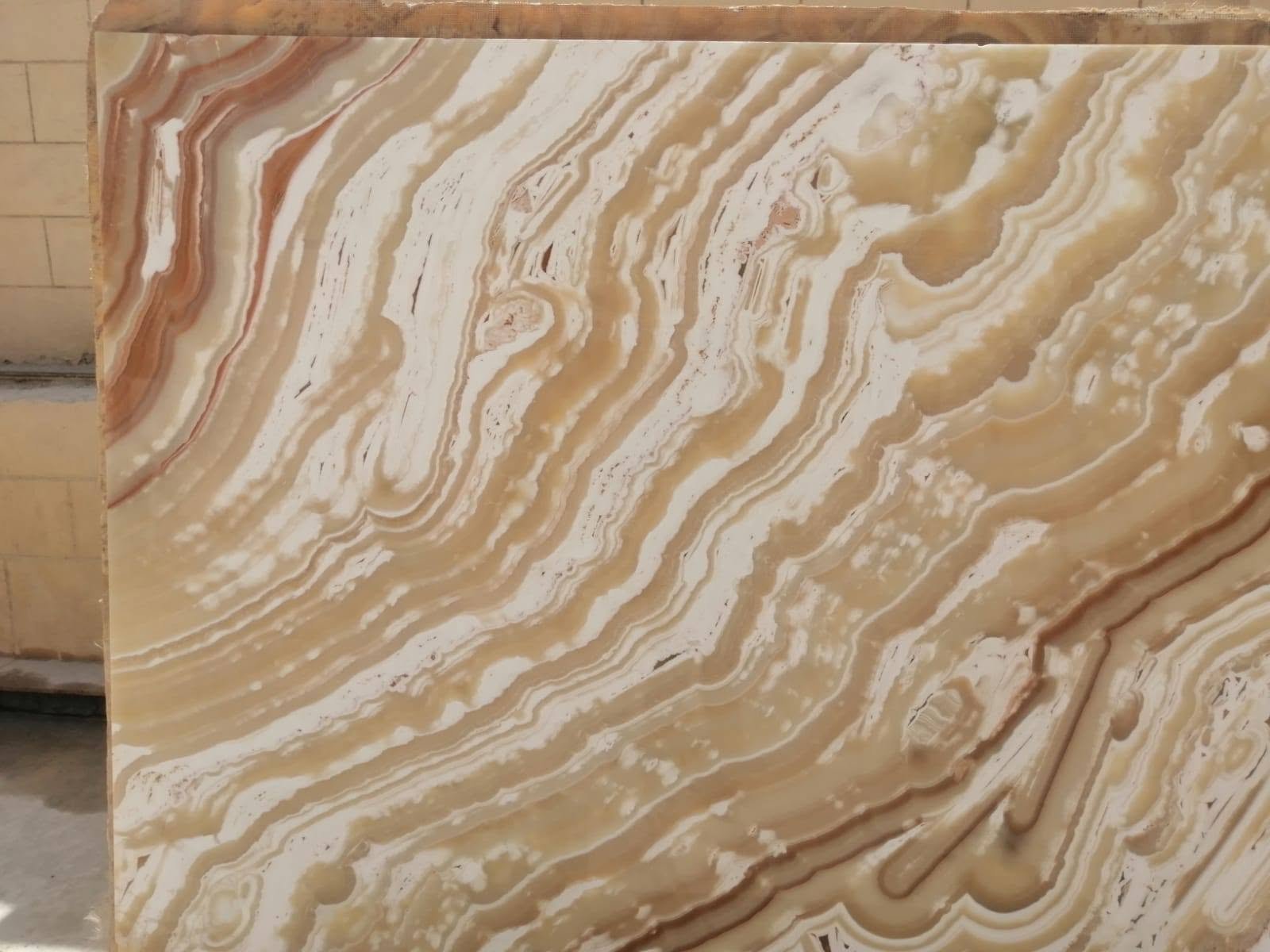
Alabaster
The detailed technical sheet for Egyptian alabaster (known historically and geologically as calcite alabaster), based on its physical, historical and commercial properties:
Profile: Egyptian Alabaster
- Stone name: Egyptian alabaster (Egyptian Alabaster), scientifically called "calcite alabaster".
- Trade name: Egyptian alabaster, alabaster marble, Egyptian marmar.
- Geological classification: Chemical sedimentary rock (travertine / calcium carbonate formed in caves and ancient waterways).
Geological note: Egyptian alabaster differs from Western (gypsum) alabaster; the former is made of calcite and is harder, while the Western type is made of gypsum and is very soft.
- Type: 100% natural rock.
- Quarry: Found in the Nile Valley and Middle Egypt; among its most famous historical and current quarries are the Hatnub quarries east of Tell el-Amarna, the Beni Suef quarries, and the Assiut and Minya quarries.
- Color and appearance: It has warm colors ranging from ivory white and honey yellow to orange-tinged beige. Its appearance features captivating wavy, circular and banded veins that give it a translucent look (Translucent) that lets light pass through.
- Hardness: 3 on the Mohs scale (Mohs Scale). It is considered a soft rock that is easy to shape and carve compared with basalt or granite, but it is harder than gypsum alabaster.
- Water absorption: Medium to low, ranging from 0.5% to 2%.
- Density: Ranges from 2.6 to 2.7 g/cm³.
- Abrasion and scratch resistance: Weak to medium; due to its soft calcareous nature, it scratches easily on contact with sharp objects.
- Weather resistance: Weak outdoors; it is affected by acid rain, constant humidity and ultraviolet rays, which can dull the surface and cause erosion over time.
- Ideal use:
- Indoor use only: Lighting units and illuminated lamps (thanks to its high light transmission).
- Carving statues, antiques, vases and decorative vessels (continuing the Pharaonic tradition).
- Cladding luxury interior walls and reception backdrops (with backlighting, Backlit).
- Suitable finishes:
- Polished / glossy (Polished): The most prominent finish, as it brings out the translucency of the stone and its internal veins with great precision.
- Matte (Honed): A smooth, silky texture without shine, used in some modern statues and art pieces.
- Advantages:
- Exceptional light transmission (a captivating visual effect when backlit).
- Historical and archaeological value linked to ancient Egyptian art.
- Great flexibility for hand carving and shaping fine details.
- Disadvantages:
- Very sensitive to acids (such as lemon, vinegar and chemical cleaners), which erode it immediately.
- Completely unsuitable for floors or outdoor use exposed to sun and rain.
- Brittle and breaks easily during transport and installation if not handled carefully.
- Maintenance: Requires great care; clean only with a dry or slightly damp cloth and pure water, without any chemical cleaners. Applying marble sealers (Sealers) is recommended to protect it from wet stains indoors.
- Alternatives: Natural onyx marble (Onyx), which is similar in light transmission but more expensive and more varied in colors, or synthetic alabaster (polyester).
- Average price: High, as a decorative stone and for carved art pieces; the price varies completely depending on the size of the piece, the purity of color and veins, the degree of translucency and the waste rate during manufacturing.
Natural Egyptian alabaster, used in decor, antiques and lighting.
A really great article
Thank you very much